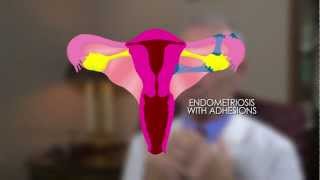
Endometrial ablation treats heavy periods by destroying the thin lining of the uterus. It works through the cervix, so there are no incisions and no hormones. Most women go home the same day and are back to their usual routine within a day or two. It’s an option for women who are finished having children and want relief without a hysterectomy.
In the video above, Dr. Maurice Leibman and his patient Cindy talk about what heavy periods did to her daily life, why she chose ablation over a hysterectomy, and how her recovery went.
Cindy’s story: planning every day around her period
Cindy’s periods got heavy enough that she had to stay near a restroom and check for leaks every hour or two. She chose her clothes based on whether an accident would show. “Which again, is very embarrassing,” she says.
Then her cycle became irregular. Her period might come after three weeks or after five, so she couldn’t plan trips around it.
Dr. Leibman, whom she had known for more than 20 years, walked her through the alternatives. She didn’t want a hysterectomy, and she says she can’t stand needles or procedures. Ablation appealed to her because it was quick and involved no cutting and no hormones.
She was in and out in about an hour. She went home, slept on and off for about a day, and was back at work the next day. “Ever since then I’ve been perfect and feel wonderful,” she says.
Heavy periods are common, and you don’t have to put up with them
Heavy periods are very common. As noted in the video, they affect about 1 in 5 women. Doctors used to call the condition menorrhagia.
Dr. Leibman says many women assume heavy bleeding is just part of being female and that it will eventually stop. In fact, it can go on for a long time. He notes that it interferes with work, exercise and sex life. Over time, heavy bleeding can also lead to low iron and anemia. It’s worth raising with a doctor, because there are effective treatments.
Signs your periods are heavier than normal
Signs of heavy menstrual bleeding include:
- Soaking through one or more pads or tampons every hour for several hours in a row
- Needing to double up on pads or tampons
- Getting up at night to change pads or tampons
- Bleeding for more than a week
- Passing blood clots larger than a quarter
- Limiting daily activities because of heavy flow
- Feeling tired, run down or short of breath from blood loss
Planning your day around restrooms, as Cindy did, is another sign worth raising with your doctor.
What causes heavy periods
Sometimes no cause is found, but common causes include:
- Hormone imbalance, often when the ovaries don’t release an egg. It can be linked to thyroid problems, obesity or insulin resistance.
- Fibroids and polyps, noncancerous growths in or on the uterus.
- Adenomyosis, when uterine lining tissue grows into the muscle wall of the uterus.
- A copper (hormone-free) IUD, which commonly makes periods heavier.
- Bleeding disorders such as von Willebrand disease, and blood-thinning medicines.
- Pregnancy complications, including miscarriage.
- Cancer of the uterus or cervix, which is less common but needs to be ruled out.
- Other conditions, including liver, kidney and thyroid disease.
In women in their later childbearing years, problems with the uterus itself are a frequent cause. That’s one reason a doctor will examine the uterus and check for cancer before recommending ablation.
What endometrial ablation is and how it works
Endometrial ablation destroys the endometrium, the lining of the uterus that sheds each month as a period. With less lining left, periods become lighter, and for some women they stop entirely.
No cuts are made. The doctor passes slim instruments through the vagina and cervix into the uterus. Depending on the device, the lining is destroyed with radiofrequency energy, heated fluid, extreme cold or microwave energy. The radiofrequency method treats the lining in about 1 to 2 minutes, and others take around 10 minutes or a series of short cycles.
Ablation can be done in a doctor’s office or an operating room. Some women have sedation with numbing medicine, and others are put to sleep, as Cindy was.
Dr. Leibman recalls that gynecologists used to recommend a hysterectomy for heavy bleeding as a matter of course. Ablation gave women a minimally invasive option that keeps the uterus in place.
Who is a good candidate
Ablation is generally for women with heavy bleeding who are sure they don’t want to become pregnant in the future. Pregnancy is still possible afterward, but it’s high risk for both mother and baby, so doctors advise long-lasting birth control or sterilization.
It generally isn’t recommended for women who:
- Have gone through menopause
- Have cancer of the uterus or a higher risk of it
- Have an active pelvic infection
- Have certain conditions of the uterus
- Want to get pregnant in the future
Age matters too. The lining can grow back before menopause, so the best candidates are generally over 40. In one Mayo Clinic study, women under 45, women with significant period pain and women who’d had their tubes tied were more likely to need a hysterectomy later.
What to expect: the procedure and recovery
Dr. Leibman says almost everyone is up and about the day after the procedure.
Before. In the weeks ahead, your doctor will typically do a pregnancy test, take a small sample of the uterine lining to check for cancer, and look at the uterus with ultrasound or a thin camera (hysteroscopy). An IUD has to come out first. Some women take medicine beforehand to thin the lining.
The day of. The ablation itself is short. Cindy, who says she can’t stand needles, was in and out in about an hour.
Recovery. Dr. Leibman describes it as going home, taking a nap and using pain medicine as needed. Cramping that evening is common. You may also have:
- Period-like cramps for a few days
- A watery, blood-tinged discharge for a few weeks, heaviest in the first few days
- A need to urinate more often for the first 24 hours
Ask your doctor when you can return to exercise and sex. A follow-up visit checks how you’re healing.
Results and risks
Most women end up with much lighter periods, and some stop having periods altogether. Full results can take a few months to show. Results are most predictable for the first five to seven years, and some women later need a hysterectomy, especially those treated at a younger age.
Complications are rare. They include:
- Pain, bleeding or infection
- Heat or cold damage to nearby organs
- A puncture of the uterine wall by an instrument
Two longer-term points are worth knowing. Pregnancy after ablation is high risk, with a greater chance of miscarriage, ectopic pregnancy and placenta problems. Scar tissue inside the uterus can also make it harder to check the cause of any unusual bleeding later on.
Endometrial ablation vs. hysterectomy
Ablation is quicker with a far shorter recovery, while a hysterectomy is the only treatment certain to end periods for good.
| Endometrial ablation | Hysterectomy | |
|---|---|---|
| What’s done | The lining of the uterus is destroyed | The uterus is removed |
| Incisions | None | None, a few small ones or one larger one, depending on the method |
| Hospital stay | None; usually home the same day | Same day to several days |
| Recovery | Usual activities within a day or two | At least 4 to 6 weeks after laparoscopic surgery, longer after abdominal surgery |
| Periods afterward | Lighter, and sometimes they stop | Stop permanently |
| Pregnancy afterward | Possible but high risk, so birth control is needed | Not possible |
| Further treatment | Some women need a hysterectomy later | Not needed for bleeding |
A hysterectomy is still the right choice for some women, for example those with cancer or large fibroids. Your doctor can explain which option fits your situation.
Other treatment options
Ablation isn’t usually the first thing doctors try. Depending on the cause, your age and whether you want children, options include:
- Medicines such as birth control pills, a hormonal (progestin) IUD, tranexamic acid or anti-inflammatory pain relievers, which can reduce bleeding
- Iron supplements to treat or prevent anemia
- Removing polyps or fibroids through a hysteroscope or with surgery
- Uterine artery embolization, which shrinks fibroids by cutting off their blood supply
- Hysterectomy, when other treatments haven’t worked or aren’t suitable
Unlike ablation, medicines and the removal of polyps or fibroids can be options for women who still want to have children.
When to see a doctor
Make an appointment with your gynecologist or a women’s health specialist if heavy periods are limiting your life or you have any of the signs listed above. Get help before your next scheduled exam if you have:
- Bleeding that soaks at least one pad or tampon an hour for more than two hours in a row
- Bleeding between periods or other unusual vaginal bleeding
- Any vaginal bleeding after menopause
Get emergency care if you’re bleeding very heavily and feel dizzy, faint, short of breath or have a racing heart, or if you might be pregnant and have heavy bleeding or severe pain.
Questions to ask your doctor
- What’s causing my heavy bleeding?
- Should I be tested for anemia or a bleeding disorder?
- Which treatments make sense for me, and what should I try first?
- Am I a good candidate for endometrial ablation at my age?
- Which ablation method do you use, and will I be awake or asleep?
- What birth control will I need afterward?
- How likely am I to need more treatment later?
- When can I go back to work, exercise and sex?
Frequently asked questions
Is endometrial ablation painful? You’ll have sedation and numbing medicine or general anesthesia during the procedure. Afterward, period-like cramps for a day or a few days are common and usually ease with over-the-counter pain relievers.
Will my periods stop completely? Some women stop having periods, but most have much lighter ones. It can take a few months to see the full result.
Does endometrial ablation use hormones? The procedure itself doesn’t. It destroys the uterine lining with energy, heat or cold, which was part of the appeal for Cindy. Some women do take medicine for a few weeks beforehand to thin the lining.
Can I get pregnant after endometrial ablation? It’s possible but dangerous for both mother and baby. You’ll need reliable birth control or sterilization until menopause.
Does ablation cause menopause? No. Your ovaries aren’t affected, so your hormones and the timing of menopause don’t change.
How long does recovery take? Most women rest the day of the procedure and are back to their routine the next day or two. Light, blood-tinged discharge can last a few weeks.
About Dr. Maurice Leibman
Dr. Maurice Leibman is the physician featured in this video. Cindy has known him for more than 20 years. Visit his Best Docs Network profile for his practice location, background and how to contact his office.
More on women’s health
- When Should Young Women Start Pap Smears and Pelvic Exams?
- Vaginal Sling for Urinary Incontinence
- Find a women’s health specialist
Sources
- Mayo Clinic. Endometrial ablation.
- Mayo Clinic. Heavy menstrual bleeding: Symptoms and causes.
- Mayo Clinic News Network. Endometrial ablation when pelvic pain or endometriosis are present.
- MedlinePlus (U.S. National Library of Medicine). Hysterectomy, laparoscopic: discharge.
Medical disclaimer
This article and video are for general educational purposes only and are not medical advice, diagnosis or treatment. Reading this page or watching the video does not create a doctor-patient relationship with Best Docs Network or any physician featured here. Always talk with a qualified healthcare professional about your symptoms and treatment options before making decisions about your care.
The patient in this video is sharing her own experience. Individual results, recovery times and risks vary, and the outcome described may not be typical for everyone. Best Docs Network does not provide medical care.
If you have very heavy bleeding with dizziness, fainting, shortness of breath or a racing heart, or think you may have a medical emergency, call 911 or go to the nearest emergency room.