





































Overview
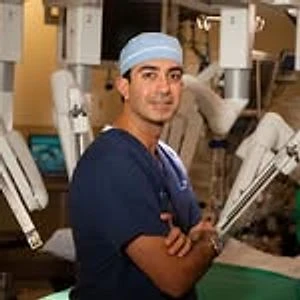
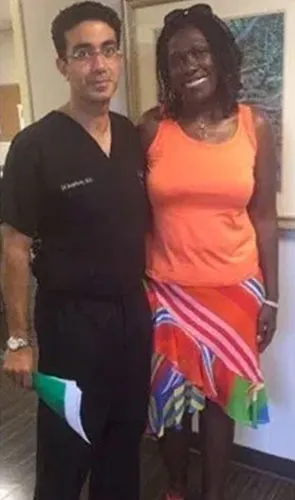
Dr. Hossein Bagshahi is a board-certified, fellowship-trained bariatric and general surgeon in Fort Worth. He leads Bagshahi Bariatric and General Surgery, where he performs gastric sleeve, gastric bypass, duodenal switch and revision surgery, most of it minimally invasive or robotic, and helps patients who had weight loss surgery elsewhere.
Read Dr. Bagshahi's full biography
Dr. Hossein Bagshahi is fellowship-trained in bariatric and minimally invasive surgery, as well as endoscopic surgery and robotic surgery. He was trained at the University of Texas Medical School in Houston, and became board-certified by the American Board of Surgery. He also holds the prestigious distinction of FASMBS (Fellow of the American Society of Metabolic and Bariatric Surgery).
Dr. Bagshahi began his surgical internship training at The Mayo Clinic Graduate School of Medicine in Rochester, Minnesota, and went on to complete his training in general surgery at the University of Massachusetts School of Medicine in Worcester. He was selected for one of the most highly competitive Fellowships in Bariatric and Minimally Invasive Surgery in Houston. Dr. Bagshahi has broad exposure to all aspects of weight loss surgery, specializing in gastric sleeve surgery, laparoscopic gastric bypass surgery, LAP-BAND®, LAP-BAND revision surgery, duodenal switch procedures, and minimally invasive and robotic surgery. Dr. Bagshahi is proud of his safety rating and his dedication to results. Patients who receive treatment elsewhere occasionally run into issues. While complications are uncommon, Dr. Bagshahi is one of few surgeons who has the ability to help patients who have experienced failures from previous bariatric surgery performed by another physician. He leads Bagshahi Bariatric and General Surgery with a focus on helping North Texans reshape their health and longevity through advanced surgical treatments and support.
Dr. Bagshahi’s areas of interest include bariatric surgery, surgery for reflux disease, and minimally invasive surgery, providing a comprehensive suite of options for individuals considering weight loss surgery. Dr. Bagshahi aims to help obese patients suffering from comorbidities related to excessive weight gain (metabolic syndrome, type 2 diabetes, hypertension, joint pain, sleep apnea, depression, and infertility) reverse their disease processes through dieting, exercise, and other lifestyle changes.
Dr. Bagshahi is published in numerous peer-reviewed journals and textbook chapters, including the Journal of Clinical Research and the Journal of the American College of Surgeons, on topics ranging from the treatment of metabolic syndrome to robotic-assisted surgery. He is a native of the Dallas/Fort Worth area who has traveled extensively in his pursuit of excellence in the realm of bariatric and weight loss surgery. He brings his expertise back home to serve patients in Fort Worth, Dallas, Arlington, Irving, Keller, Alliance, Grapevine, Southlake, Aledo, Burleson, Mansfield, and the surrounding communities. Dr. Bagshahi also speaks fluent Farsi.
- Training: surgical internship at the Mayo Clinic Graduate School of Medicine; general surgery residency at the University of Massachusetts School of Medicine
- Fellowship: Bariatric and Minimally Invasive Surgery, Houston
- Teaching: surgery faculty at the TCU School of Medicine, where he trains and mentors medical students
- Also at the practice: Dr. Joshua Weis, a fellowship-trained bariatric and hernia surgeon, whom the practice welcomed in January 2026
Weight loss surgery with Dr. Bagshahi
Dr. Bagshahi performs the major types of weight loss (bariatric) surgery, most of them laparoscopically through small incisions, with robotic assistance when it helps. Which operation is right depends on your weight, your health conditions and your goals. His practice’s own comparison of gastric bypass and gastric sleeve puts it plainly: there is no single best operation, only pros and cons for each person.
How the main operations compare
| Gastric sleeve | Gastric bypass | Duodenal switch and SIPS | |
|---|---|---|---|
| How it works | Removes about 80% of the stomach | A small pouch joined to the small intestine | A sleeve plus a longer intestinal bypass |
| Often suited to | BMI 40 or more, or 35 or more with a weight-related condition* | BMI 40 or more, or 35 or more with a weight-related condition* | BMI 50 or more, or severe type 2 diabetes |
| Usual hospital stay | Often the same day, up to two nights | Usually one night | A few days (two nights for SIPS) |
| Weight loss his practice reports | About two-thirds of excess weight | About half of excess weight in the first six months | 60% to 80% of excess weight |
| Biggest trade-off | Reflux can start or get worse | Dumping syndrome and ulcers | Loose stools and the highest risk of vitamin shortages |
| Daily protein goal (his practice) | 60 to 80 grams | 60 to 80 grams | 100 to 120 grams (80 to 100 after SIPS) |
| Vitamins and minerals | For life | For life | For life, with the closest monitoring |
* Newer guidelines go lower; see who can have weight loss surgery.
Who can have weight loss surgery
Surgery is usually considered after diet, exercise and medical treatment haven’t brought lasting results. In general, you may qualify if:
- your BMI is 40 or more, or
- your BMI is 35 or more and you have a weight-related condition such as type 2 diabetes, high blood pressure or sleep apnea.
Newer guidelines go further: surgery is recommended at a BMI of 35 or more even without other conditions, and is worth considering at 30 to 34.9 with type 2 diabetes or another metabolic condition. People of Asian descent face health risks at a lower weight, so they can qualify from a BMI of about 27.5. There is no upper age limit; your overall health matters more than your birthday.
Many insurance plans, including Medicare, still use the older criteria, and some ask for a supervised diet program before they approve surgery, so check your coverage early. Weight loss surgery today is very safe: the risk of dying around the time of the operation is between about 3 and 20 in 10,000.
Gastric sleeve
The gastric sleeve (sleeve gastrectomy) removes about 80% of the stomach, leaving a narrow tube about the shape of a banana. Nothing in the intestine is rerouted. The part that’s removed makes most of the body’s hunger hormone, ghrelin, so the new stomach doesn’t just hold less: many people feel less hungry and full sooner, and blood sugar can improve within days to weeks.

The operation. Dr. Bagshahi performs it laparoscopically through five small incisions, and his practice says it usually takes about an hour. Many of his patients go home the same day; others stay one or two nights.
Results. His practice reports that patients lose about two-thirds of their excess weight on average. Most people lose about 25% to 30% of their total body weight within two years. Over the long run, weight loss after a sleeve comes close to a gastric bypass, a little less on average. Type 2 diabetes, high blood pressure, heart disease and sleep apnea often improve, and some go away.
Risks. The main surgical risk is a leak from the long staple line, which is uncommon, and the overall surgical risk is lower than with a bypass. The sleeve’s weak spot is reflux: heartburn can start or get worse afterward, and ten years on, inflammation of the esophagus is several times as common as after a bypass. That’s why people who already have significant reflux are often better served by a bypass. A sleeve can’t be reversed, but it can be converted to a bypass or a duodenal switch later. Smoking raises the risk of leaks and infections, so quitting before surgery matters.
Life after a sleeve. You’ll take vitamin and mineral supplements for life, although shortages are less common than after a bypass. His guide aims for 60 to 80 grams of protein a day.

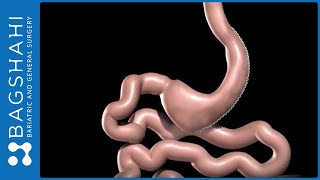

Gastric bypass
Gastric bypass (Roux-en-Y) divides the stomach into a small upper pouch, about the size of an egg, and the much larger remainder, which stays in place but no longer receives food. The pouch is connected to the small intestine about three to four feet farther down, in a shape like the letter Y. Food skips most of the stomach and the first part of the small intestine, so you eat less and absorb fewer calories, and changes in gut hormones curb hunger and improve blood sugar.

The operation. Dr. Bagshahi usually performs it laparoscopically, with a robotic option. His practice says most patients go home the day after surgery; a stay of one to two days is typical.
Results. It’s possible to lose about 70% or more of your excess weight within two years, and his practice reports about half in the first six months. Seven years after surgery, people weigh on average more than 25% less than before. Gastric bypass is especially strong against type 2 diabetes, which often improves even before much weight is lost: in a large long-term study, about 7 in 10 people were in remission a year after surgery, and 6 in 10 after seven years. It also treats reflux well.
Risks.
- Dumping syndrome. Sugary or very rich foods can move too quickly into the intestine. Early dumping starts within about 30 minutes of eating, with cramps, nausea, diarrhea, dizziness or a racing heart. Late dumping comes one to three hours after eating, with sweating and shakiness from low blood sugar. It’s more common after a bypass than after other operations, and small, low-sugar meals help prevent it.
- Ulcers. An ulcer can form where the pouch joins the intestine; in a large registry, about 1 in 9 people had one within eight years. Smoking raises the risk by more than half, and anti-inflammatory pain relievers (NSAIDs such as ibuprofen, naproxen and aspirin) raise it too, so you’ll need to stop smoking and avoid NSAIDs. Acid-reducing medicine for at least the first three months lowers the risk.
- Internal hernia. Rerouting the intestine leaves gaps that a loop of bowel can slip through, sometimes years later. Closing those gaps during surgery roughly halves the risk. Sudden, cramping belly pain after a bypass needs urgent care.
- Nutrition. Shortages of iron, vitamin B12, calcium and vitamin D are more common than after a sleeve, so you’ll take a multivitamin with iron, plus calcium and B12, for life. The risk of alcohol problems may also rise.
His guide aims for 60 to 80 grams of protein a day after a bypass.


Duodenal switch and SIPS
The duodenal switch (biliopancreatic diversion with duodenal switch) is two operations in one. First comes a sleeve. Then the small intestine is divided and reconnected so food bypasses about three-quarters of it and meets bile and digestive juices only in the last stretch. You eat less and absorb much less fat and fewer calories. Sometimes it’s done in two stages: the sleeve first, then the intestinal part once weight loss has begun.

Who it suits. It brings the most weight loss of the standard operations and is considered the most effective for type 2 diabetes. His practice recommends it especially for people with a BMI of 50 or more. It’s also used for type 2 diabetes that hasn’t responded to other treatment, and for people who need more weight loss after a sleeve.
Results. It may be possible to lose 70% to 80% of your excess weight within two years. In a trial of people with a BMI of 50 to 60, BMI fell by about 22 points after a duodenal switch, compared with about 14 after a gastric bypass. Fifteen years later, the switch group still weighed about 38% less than before surgery, compared with about 23% for bypass.
The trade-offs. The extra effect comes with more side effects: in the same long-term trial, problems were about three times as common as after a bypass. Expect looser, more frequent bowel movements and more gas, and reflux can start or get worse. It also carries the highest risk of malnutrition of any operation, including shortages of protein, iron, calcium, vitamin B12 and the fat-soluble vitamins A, D, E and K. You’ll take supplements for life and have blood tests every few months at first, then at least once a year for life. His guide aims for 100 to 120 grams of protein and at least 64 ounces of fluid a day. His practice says patients typically stay in the hospital for a few days.
SIPS and SADI-S. These newer versions keep the sleeve but use a single intestinal connection instead of two, which makes the operation simpler. Dr. Bagshahi performs SIPS (stomach intestinal pylorus-sparing surgery). His practice says patients usually stay in the hospital for two nights and aim for 80 to 100 grams of protein a day. These operations suit people who have already had a sleeve and need more weight loss. Early results are strong, around 73% of excess weight lost at five years, although long-term results are still being gathered. As with the full switch, vitamins are for life, and loose stools and gas are more likely.


Revision surgery
Most people do well after their first operation, but some need a second one. Common reasons are weight regain, not losing enough weight, health conditions that didn’t improve, or complications such as reflux, ulcers, a stretched pouch, or a gastric band that has slipped or worn into the stomach wall. Some of Dr. Bagshahi’s revision patients had their first operation elsewhere.


Finding the cause. He starts with an upper endoscopy to look at the stomach, pouch and connections, because the right fix depends on what’s actually wrong.
The options his practice offers:
- Sleeve to gastric bypass. The most common revision after a sleeve, and usually the best choice when reflux is the problem: reflux goes away for about 4 in 5 people after the conversion.
- Gastric band removal and conversion. The band is removed and, if you want to keep losing weight, converted to a sleeve or a bypass.
- Endoscopic stitching of a stretched bypass outlet. After a bypass, a stretched pouch or outlet is a common reason for regain. Working through the mouth with no incisions, the surgeon stitches the connection between the pouch and the intestine tighter. It’s a smaller step than surgery: on average people lose about 8% of their weight in the first year, serious complications are rare, and the effect tends to fade after about two years.
- Other revisions. His practice also lists re-sleeving, converting a sleeve or a bypass to a duodenal switch, lengthening the bypass limb, and reversing an earlier bypass or gastroplasty.
Risks. A revision is more complex than a first operation, with longer hospital stays and higher complication rates, so it pays to choose a surgeon who does them regularly.

Robotic surgery
With the da Vinci system, Dr. Bagshahi sits at a console a few feet from the patient and controls slim instruments placed through small incisions, watching a magnified 3D view. The robot never moves on its own: every movement is the surgeon’s. Its wristed instruments are easier to handle in tight spaces than standard laparoscopic tools. He completed fellowship training in robotic surgery and uses it for some weight loss, reflux and hernia operations, including hiatal hernia repair.
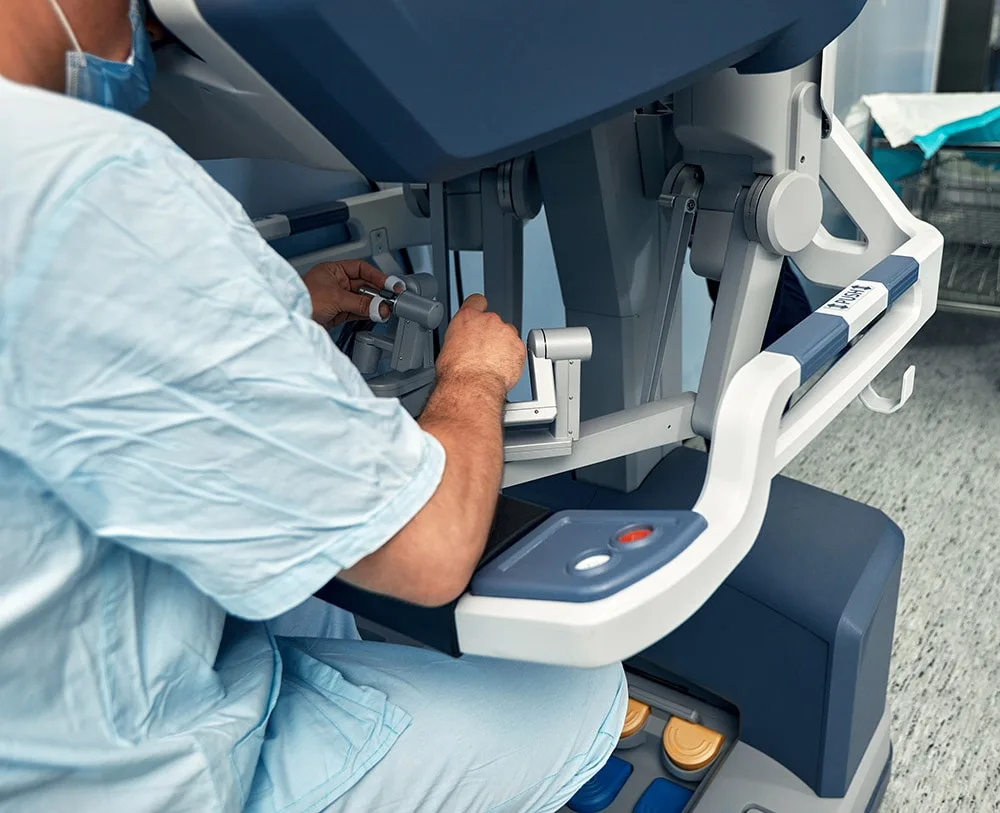
Is robotic surgery better? For weight loss operations, large studies find results similar to standard laparoscopic surgery, with somewhat longer operating times. It’s a tool the surgeon chooses for each operation, not something you need to ask for.

Non-surgical options
Medical weight loss and semaglutide
Not everyone needs or wants surgery. Dr. Bagshahi runs a physician-supervised medical weight loss program for people with a BMI of 30 or more, which can include counseling, medication and, if needed, a move to surgery. It’s also open to patients who regain weight after surgery.
Semaglutide (Wegovy). His practice offers weekly semaglutide injections for adults with a BMI of 30 or more, or 27 or more with a weight-related condition. Semaglutide acts like GLP-1, a natural gut hormone that regulates appetite, so you feel less hungry and eat less. The dose is raised step by step over about four months, which helps keep side effects down. It’s one of six medicines approved for long-term weight management, and it now also comes as a daily tablet.
What to expect. In the main clinical trial, adults lost about 15% of their body weight over 68 weeks, compared with about 2% on a placebo. For people with heart disease, it also lowers the risk of heart attack and stroke by about 20%.
Side effects. The most common are nausea, diarrhea, vomiting, constipation and belly pain, mostly early on and after dose increases. Headache, tiredness and hair loss can also happen. Less common but serious problems include pancreatitis, gallbladder problems, kidney problems from dehydration, and low blood sugar when it’s taken with diabetes medicines such as insulin. It isn’t for anyone with a personal or family history of medullary thyroid cancer or multiple endocrine neoplasia type 2 (MEN 2). Tell your care team you take it before any surgery or procedure that needs anesthesia, and stop it at least two months before a planned pregnancy.
When you stop. Weight tends to come back: a year after stopping, people in one study had regained about two-thirds of the weight they’d lost. Many people stay on it long term, so plan it with your doctor rather than treating it as a short course.
About compounded versions. Compounded semaglutide isn’t FDA-approved, and counterfeit pens have been sold, so get it through your doctor and a licensed pharmacy.
truSculpt 3D body contouring
truSculpt 3D uses radiofrequency energy to reduce stubborn fat in areas such as the belly and flanks. It isn’t a weight loss treatment. His practice describes it as its preferred non-surgical body contouring option, usually given in two or three sessions.

What the practice does not currently offer
To save you a call: Dr. Bagshahi does not currently perform endoscopic sleeve gastroplasty (ESG) or gastric balloons (ORBERA or Obalon). He no longer recommends placing new LAP-BAND devices, but he does care for people who already have one, including band removal and conversion to another operation.
Reflux, hernia and gallbladder surgery
Dr. Bagshahi is also a general surgeon, and much of that work uses the same minimally invasive skills.
Heartburn and GERD
Gastroesophageal reflux disease (GERD) means stomach acid keeps backing up into the esophagus, causing heartburn, regurgitation, a sour taste or a cough. Most people do well with diet changes and medicine. Surgery is worth considering when symptoms don’t improve with lifestyle changes and medicines, when you’d rather not take medicine for the rest of your life, or when acid has damaged the esophagus, causing scarring, narrowing, ulcers or bleeding.

Dr. Bagshahi’s practice starts with conservative care and, when needed, an upper endoscopy, a camera exam of the esophagus and stomach, to find the cause. When surgery makes sense, he offers three approaches:
- Laparoscopic Nissen fundoplication. The top of the stomach is wrapped all the way around the lower esophagus, strengthening the valve that keeps acid down. Any hiatal hernia, where part of the stomach has slipped up through the diaphragm, is repaired first by tightening the opening with stitches. Fundoplication is the most common surgery for GERD and usually brings long-term relief. Sometimes a partial wrap (a Toupet fundoplication) is the better fit, and your surgeon recommends the type that suits you. The operation takes about one to three hours.
- TIF (transoral incisionless fundoplication). The valve is rebuilt from inside: a device passed through the mouth folds the lower esophagus into a partial wrap and holds it with small fasteners, so there are no incisions. It takes about 45 to 60 minutes under general anesthesia, and most people go home the same day or the next. On its own, TIF suits milder reflux without a large hiatal hernia; with a large one, it can sometimes be combined with a laparoscopic hernia repair. It is newer and less widely used than fundoplication.
- LINX. A flexible ring of magnetic titanium beads is placed around the lower esophagus during laparoscopic surgery. The beads part to let food through, then close to keep acid down. LINX has been FDA-approved since 2012 for adults with confirmed GERD who still have symptoms despite medicine. It isn’t for people allergic to titanium, stainless steel, nickel or iron-based metals, and it hasn’t been studied in people with a hiatal hernia larger than 3 centimeters. In the main clinical study, 90% of patients had fewer symptoms or no longer needed reflux medicine one and two years later. The beads don’t set off airport security. Current LINX devices are safe for MRI scans up to 1.5 tesla under specific conditions, while older ones have stricter limits, so always tell an imaging team you have one.
Recovery. After laparoscopic fundoplication, most people go home within one to three days, start with liquids for the first weeks, then move to soft foods, and return to a desk job in about two to three weeks. Trouble swallowing is common at first and usually fades within one to three months. Some people notice bloating or find it hard to burp, and some still need reflux medicine afterward.
Because extra weight pushes stomach acid upward, weight loss surgery, gastric bypass in particular, can also treat reflux in people with obesity.
Call your surgeon for trouble swallowing that keeps you from eating, a fever of 101°F or higher, a swollen belly, vomiting that lasts more than a day, or yellowing of the skin or eyes.
Hernia repair
A hernia is a weak spot in the muscle wall that lets fat or intestine bulge through. The most common are groin (inguinal) hernias, which about 27% of men and 3% of women develop at some point. Others appear at the belly button (umbilical), at an old incision (incisional or ventral), or at the diaphragm (hiatal).
A hernia doesn’t heal on its own. A small one that causes few symptoms can sometimes be watched, but most men who put off surgery end up needing it within about five years, and a hernia that hurts or keeps growing usually needs repair.
How it’s repaired. Dr. Bagshahi’s practice repairs most hernias laparoscopically, through small incisions, closing the weak spot with stitches or reinforcing it with synthetic mesh. Hiatal hernias are repaired with the da Vinci robot. His colleague Dr. Joshua Weis focuses on complex hernias and abdominal wall reconstruction. Mesh is the standard for most groin hernias, because it makes the hernia less likely to come back. Compared with open surgery through one larger cut, laparoscopic repair usually means less discomfort, smaller scars and a quicker return to normal activities, with about the same long-term results. It is also a good choice for hernias on both sides, and for a hernia that came back after an open repair, because the surgeon can avoid the old scar tissue.
Recovery. Most hernia repairs are outpatient surgery, so you go home the same day. You’ll be encouraged to walk around right away, and many people are back to light daily activities and desk work within a few days to a week. Getting back to your full activity level usually takes a few weeks; plan on lifting nothing heavier than about 10 pounds for four to six weeks after a groin repair.
Risks. These include the hernia coming back, fluid collecting under the skin, infection, and pain that lasts. About 10% to 12% of people still have some pain a year after a groin repair, possibly fewer after laparoscopic surgery.
Go to the emergency room if a hernia suddenly gets bigger, won’t go back in, turns red, purple or dark, or comes with severe pain, nausea, vomiting or fever. A trapped (strangulated) hernia is life-threatening.
Gallbladder removal
Gallstones are common: they affect 10% to 15% of people in the United States, and most never cause symptoms or need treatment. When a stone blocks a duct, it causes a gallbladder attack: sudden pain that quickly gets worse in the upper right or center of the belly, sometimes spreading to the back between the shoulder blades or to the right shoulder, often with nausea or vomiting. An attack can last from several minutes to a few hours and often follows a heavy meal.
Get care right away for belly pain so bad you can’t sit still or get comfortable, pain that lasts several hours, a high fever with chills, yellowing of the skin or eyes, or tea-colored urine with light-colored stools.
The surgery. Removing the gallbladder (cholecystectomy) is the usual treatment for gallstones that cause symptoms. It is also done for stones stuck in the bile duct, an inflamed gallbladder, pancreatitis caused by gallstones, and large gallbladder polyps. Almost all are done laparoscopically: the surgeon works through several small incisions with a camera and slim instruments. His practice says the operation takes a little less than an hour; a complicated case can take up to two. Occasionally, because of scar tissue from earlier surgery or inflammation, a surgeon has to switch to a larger, open incision to finish safely. Removing the gallbladder also stops gallstones from coming back, which diet changes usually can’t.
Recovery. Most people go home the same day, once they can eat, drink and walk without help; some stay one night. Shoulder pain from the gas used during surgery is common and usually goes away within a day or two. Full recovery from laparoscopic surgery takes about a week, and most people are back at work within one to two weeks. After an open operation, expect two to three days in the hospital and four to six weeks to recover.
Life without a gallbladder. You can digest food normally without it. Some people have softer, more frequent stools for a few weeks or longer, and this usually improves.
Risks. The risk of complications is small. The most serious is an injury to the bile duct, which happens in about 3 of every 1,000 operations. Others include a bile leak, bleeding, infection, injury to the liver or intestine, and the usual risks of general anesthesia, such as blood clots and pneumonia.
Call your surgeon for a fever of 101°F or higher, yellowing of the skin or eyes, gray stools, pain that medicine doesn’t help, or being unable to eat or drink.
Nutrition with Dr. Bagshahi
Dr. Bagshahi gives every patient a detailed nutrition guide and reinforces it at each visit. As the guide puts it, surgery takes you halfway; nutrition and exercise take you the rest of the way. Best Docs Network turned that guide into a six-part series. Start with the topic you need.
Before surgery: the liver prep diet
A short, strict, mostly liquid diet before surgery shrinks the liver so the operation is easier and safer. Dr. Bagshahi tells each patient how long to follow it, and his practice’s FAQ notes that some insurance plans also require a supervised diet for three to six months.

After surgery: the diet stages
Food comes back in four stages: clear liquids, full liquids, puréed food and then soft solid food, over about five to six weeks in Dr. Bagshahi’s program.

Protein
Protein protects your muscle while you lose weight quickly. His guide sets 60 to 80 grams a day after a sleeve or bypass, and 100 to 120 grams after a duodenal switch or SADI-S, and asks you to eat your protein first at every meal.

Hydration
Dehydration is a leading cause of nausea early after surgery. His guide sets a goal of at least 64 ounces a day, sipped between meals rather than with them.

Vitamins and minerals
Supplements are needed for life after any weight loss operation, with blood tests at least once a year, his practice’s FAQ explains.
Nausea, dumping syndrome and other stomach troubles
Most stomach trouble after surgery comes from eating too fast, eating too much or drinking with meals. His guide includes a “tummy troubleshooting” section, and Best Docs Network’s article also covers the warning signs that need a call to your surgeon.

Recipes and meal ideas
His guide ends with sample meals, such as a garden vegetable omelet, taco lettuce wraps, chicken and zucchini soup, and roasted shrimp with spaghetti squash. His website has more.
Exercise
Walking starts right away. His practice asks patients to be able to walk at least 100 feet, four times a day, and to keep walking often during recovery.

Emotional eating and support
Surgery changes your stomach, not your habits or stress. Support from family, friends and support groups helps people keep the weight off.
Keeping the weight off
Some weight regain is common in the years after surgery. His practice advises annual follow-up visits, protein at every meal, enough water, and avoiding grazing and liquid calories. If needed, medication or revision surgery can help.
Cost, insurance and financing
- Insurance: his practice accepts most medical insurance plans, but not Medicaid. Many plans cover weight loss surgery when you meet their criteria.
- Employer programs: the practice works with Lantern (formerly SurgeryPlus) and Transcarent, and with Carrum Health and BARInet, which some employers use to cover bariatric surgery at little or no cost to employees.
- Self-pay: paying directly can mean a shorter wait and no risk of an insurance denial. His website lists self-pay prices in the Dallas–Fort Worth area of about $11,500 to $12,000 for a gastric sleeve and $12,000 to $15,000 for a duodenal switch. Ask the practice for a current quote.
- Financing: payment plans are available through medical lenders such as CareCredit, Prosper and Cherry.
Getting started
- Ask a question or request an appointment with the form on this page.
- Expect a full evaluation. His practice reviews your nutrition and weight history, your medical conditions and your emotional health, as most bariatric programs do. See Patient information.
- Check your coverage with your insurer or employer program (see above).
- Start the habits early: protein first, sipping water all day, and daily walks.
In the news
Dr. Bagshahi has appeared on Good Morning Texas to talk about obesity, and his practice has been featured in Fort Worth Magazine, Society Life, Living Magazine and Redbook.