If you can’t urinate at all, get medical care right away. The National Institute of Diabetes and Digestive and Kidney Diseases (NIDDK), part of the National Institutes of Health, also lists painful, frequent and urgent urination with fever and chills, blood in the urine, and severe pain in the lower abdomen or urinary tract as reasons to seek care right away.
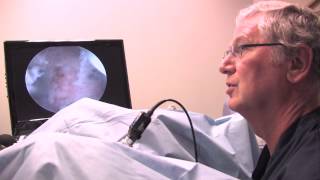
In the video above, urologist Dr. Michael White describes a patient whose enlarged prostate had stopped him from urinating, the options he faced, and why the two chose a robotic operation. The patient also talks about his recovery.
What an enlarged prostate is
The prostate is a gland that sits below the bladder and wraps around the urethra, the tube that carries urine out of the body. NIDDK explains that benign prostatic hyperplasia (BPH) is a noncancerous enlargement of the prostate. It is the most common prostate problem in men over 50 and becomes more common with age: NIDDK estimates it affects about 5 to 6 percent of men aged 40 to 64 and 29 to 33 percent of men 65 and older.
Dr. White explains that it’s a common problem for older men, and that in some men the prostate grows much faster than in others.
Symptoms and complications
According to NIDDK, symptoms of BPH can include:
- trouble starting to urinate, or emptying the bladder
- a weak or interrupted stream, or dribbling afterward
- needing to urinate often or urgently, including at night
- pain when urinating
The size of the prostate doesn’t always match how bad the symptoms are. NIDDK also notes that some medicines, including certain over-the-counter cold and cough medicines, can make symptoms worse.
If BPH isn’t treated, it can lead to complications. NIDDK lists urinary retention (not being able to empty the bladder fully), blood in the urine, urinary tract infections, bladder stones and kidney disease. Dr. White names the same kinds of problems, with the worst case being the inability to urinate and possible damage to the kidneys.
That is what happened to the patient in the video: he came in because he couldn’t urinate. He says he had gone about 20 years without a prostate exam, and that he had been avoiding the checkups he should have been having.
Treatment usually starts without surgery
NIDDK describes several steps, chosen according to how much the symptoms affect your life:
- Watchful waiting for mild symptoms, with regular checkups.
- Lifestyle changes, such as drinking less before bedtime or going out, limiting caffeine and alcohol, and staying active. Mayo Clinic adds that exercise and staying at a healthy weight can help.
- Medicines, which NIDDK groups into alpha blockers, which relax muscles so urine flows more easily; 5-alpha reductase inhibitors, which can shrink the prostate or stop its growth; and phosphodiesterase-5 inhibitors. Your doctor will say whether one, or a combination, fits your situation.
- Minimally invasive procedures, such as water vapor therapy or a prostatic urethral lift.
NIDDK says surgery is considered if medicines don’t help, symptoms are severe, or complications develop.
Surgery for a very large prostate
The most common operations, such as transurethral resection of the prostate (TURP), work from the inside, through the urethra. Mayo Clinic describes TURP as using a thin lighted scope to remove all but the outer part of the prostate.
Dr. White explains that when a prostate is very large, the usual treatment of carving it out from the inside may not be possible. His patient’s prostate was about eight times the normal size, Dr. White says, too big for that approach. The options were:
- a catheter for life, changed every month, or catheterizing himself three times a day for the rest of his life
- an open simple prostatectomy, with a large incision from the belly button down to the pubic bone
- a robotic simple prostatectomy, the same procedure as the open operation done through five small incisions
MedlinePlus, from the National Library of Medicine, explains that a simple prostatectomy removes the inner part of the prostate and leaves the outer shell in place. It is considered when an enlarged prostate can’t empty the bladder or causes repeated infections, bleeding, bladder stones, very slow urination or kidney damage. Mayo Clinic says open or robot-assisted prostatectomy is generally done for a large or very large prostate. A simple prostatectomy is a treatment for BPH, not for prostate cancer.
Dr. White says the robotic approach does the same operation with a lot less morbidity, a shorter hospital stay and less blood loss. The patient recalls Dr. White telling him he would try it robotically but would switch to the open operation if there were problems.
Recovery and risks
MedlinePlus describes a hospital stay of a few days after an open simple prostatectomy, going home with a catheter, and recovery in about six weeks for many men. NIDDK notes that a catheter may be needed for several days after BPH surgery.
Possible risks of simple prostatectomy listed by MedlinePlus include bleeding, infection, blood clots, erectile dysfunction, retrograde ejaculation (semen going into the bladder), urinary incontinence and narrowing of the urethra. NIDDK adds that surgery may relieve symptoms but may not cure BPH, and that about 1 in 10 people who have surgery may need more treatment within 20 years. Ask your urologist how these risks apply to the approach recommended for you.
The patient’s outcome
Dr. White says his patient healed quickly, was in the hospital for only two days, and is urinating without difficulty, better than he has in many years. The patient says his quality of life is “100% better.”
Questions to ask your doctor
- What is causing my urinary symptoms, and could it be something other than BPH?
- Do I need tests such as a urine test, a PSA blood test or an ultrasound?
- Which medicines or lifestyle changes should I try first?
- Is my prostate too large for the usual procedures done through the urethra?
- What are the pros and cons of open and robotic surgery for me?
- How long will I need a catheter, and how long is recovery?
- What are the chances of side effects such as incontinence or sexual problems?
- Which symptoms mean I should get care right away?
Dr. White is a urologist in the San Antonio area. See Dr. White’s Best Docs Network profile for more about the practice.
This article is for general information only and is not medical advice. Talk with a qualified health professional about your own situation. If you think you may have a medical emergency, call 911.