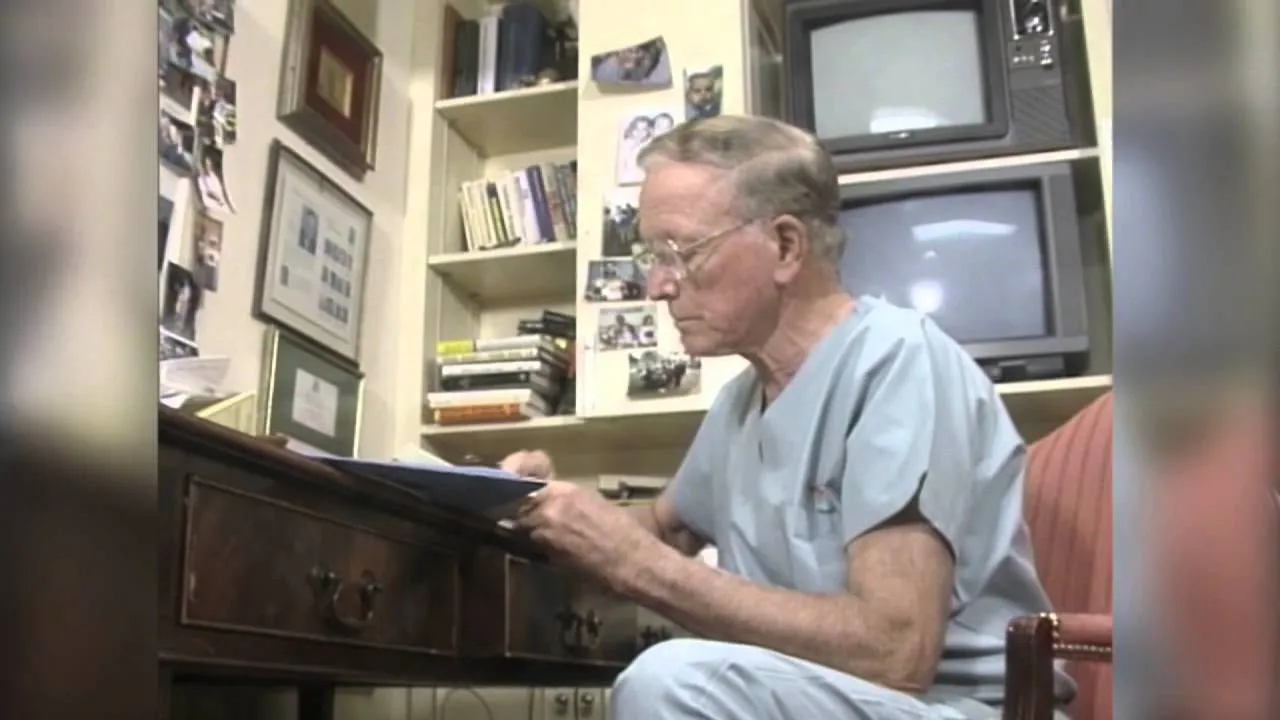
Endometrial ablation is a short procedure that treats heavy periods by destroying a thin layer of the uterine lining. There are no incisions and the uterus stays in place. Most women go home the same day and are back to their usual routine within a day or two, and afterward periods are usually lighter or back to normal. It isn’t an option for women who may want a future pregnancy. In the video above, Houston gynecologist Dr. Maurice Leibman and one of his patients explain why she chose ablation instead of a hysterectomy.
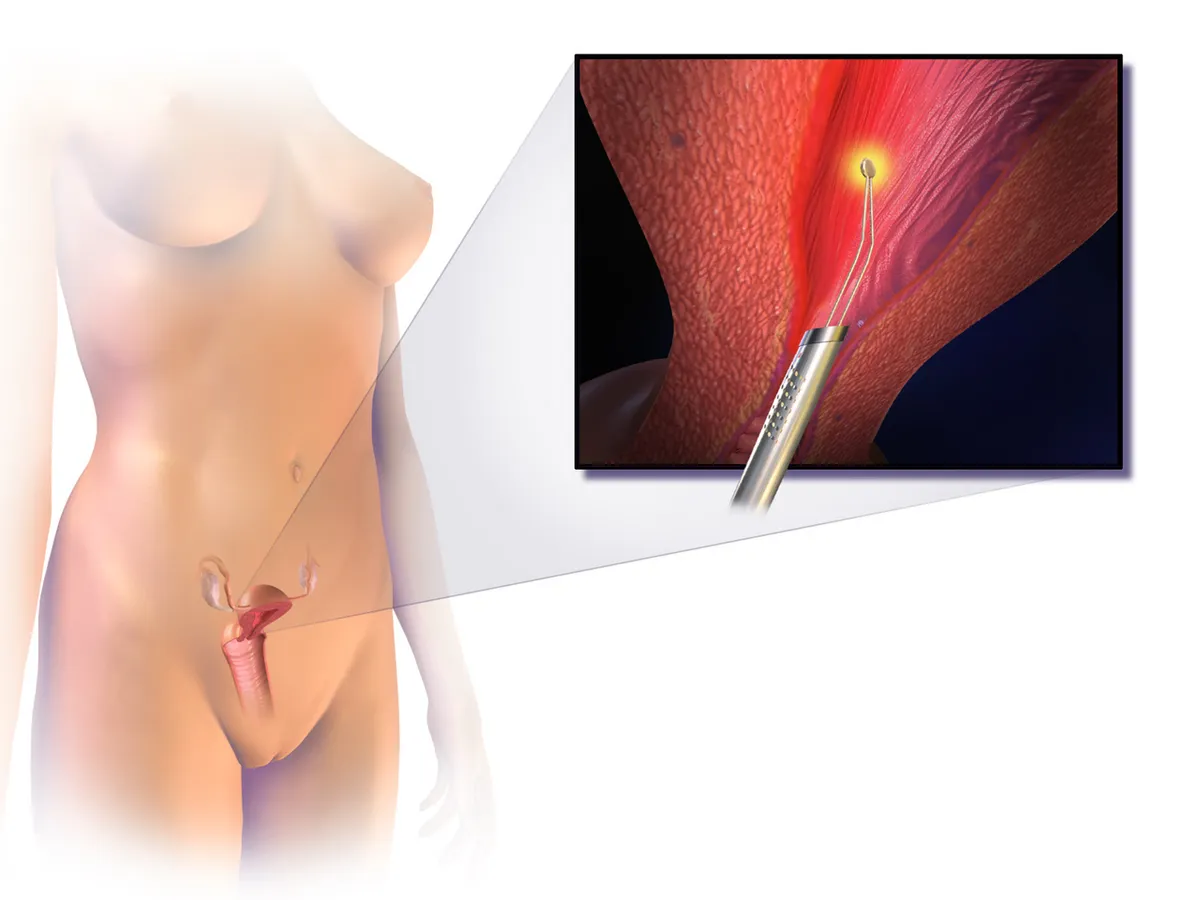
Illustration: BruceBlaus, CC BY-SA 4.0, via Wikimedia Commons; resized.
Endometrial ablation vs. hysterectomy at a glance
| Endometrial ablation | Hysterectomy | |
|---|---|---|
| What’s done | A thin layer of the uterine lining is destroyed; the uterus stays | The uterus is removed, sometimes with the cervix, fallopian tubes or ovaries |
| Incisions | None; thin instruments pass through the vagina and cervix | None for vaginal surgery; small cuts for laparoscopic; a larger cut for abdominal |
| Going home | Usually the same day, from a doctor’s office or outpatient center | Same day up to a few days in the hospital |
| Recovery | Usual activities within 1 to 2 days | About 2 to 6 weeks, depending on the type of surgery |
| Periods afterward | Usually lighter or normal, and some women stop having periods; some need more treatment later | Periods stop for good |
| Pregnancy | Not advised; still possible but high risk, so birth control is needed until menopause | No longer possible |
| Hormones | Hormone levels aren’t affected | Menopause starts right away only if both ovaries are removed |
Which option fits depends on what’s causing the bleeding, your age and health, and whether you might want children. A gynecologist can help you weigh the choices.
What Dr. Leibman says in the video
The video explains that 10 to 15 years ago, it was very common for gynecologists to suggest a hysterectomy for heavy bleeding. Endometrial ablation, a newer minimally invasive technology, instead ablates, or removes, the lining of the uterus.
Dr. Leibman describes a patient who very much wanted to avoid a hysterectomy. When they talked about a minimally invasive procedure that involved no cutting and no hormones, he says, she was really interested. The patient, who says she has known and trusted Dr. Leibman for more than 20 years and can’t stand needles or procedures, says she was in and out within an hour. She was put under for the procedure.
On recovery, Dr. Leibman says patients go home, take a nap and take some pain medicine, and there’s usually some cramping that night. By the next day, he says, almost everyone is up and about and doing what they need to do.
What other sources add: ACOG (the American College of Obstetricians and Gynecologists) says recovery right after ablation lasts about 2 hours, depending on the pain relief used. “No hormones” means ablation isn’t a hormone treatment and doesn’t change hormone levels, although MedlinePlus notes that some younger women take an estrogen-blocking hormone medicine for 1 to 3 months beforehand.
What counts as heavy menstrual bleeding?
Heavy periods are common, according to Cleveland Clinic. ACOG says heavy bleeding isn’t normal. Signs include:
- a period lasting longer than 7 days
- soaking one or more pads or tampons each hour, several hours running
- doubling up on pads, or getting up at night to change protection
- clots the size of a quarter or bigger
- bleeding that keeps you from normal activities, or feeling tired and short of breath (Cleveland Clinic)
Heavy periods can lead to iron-deficiency anemia. Severe anemia can leave you short of breath and raise the risk of heart problems.
Causes and diagnosis
ACOG lists many possible causes: fibroids and polyps (noncancerous growths), adenomyosis (lining tissue growing into the muscle of the uterus), irregular ovulation, bleeding disorders such as von Willebrand disease, blood thinners, the copper IUD, endometriosis, pregnancy problems, pelvic infection and sometimes endometrial cancer. Cleveland Clinic says a blood test can check for clotting problems.
To find the cause, your doctor will ask about your health, medicines and recent cycles (a period-tracking app helps). You may have a pelvic exam, a blood count to check for anemia, a pregnancy test and, depending on your age and symptoms, an ultrasound, a look inside the uterus with a thin, lighted scope (hysteroscopy) or a biopsy of the lining.
Who endometrial ablation is for
ACOG says medicine is usually tried first, and ablation is considered when medicine doesn’t control the bleeding. It’s only for women who don’t plan a future pregnancy. According to ACOG, it isn’t done after menopause, or in women with:
- a current or recent pregnancy
- a uterine infection now or recently
- uterine cancer, or endometrial hyperplasia (a lining that has grown too thick)
- certain other problems of the uterus or its lining
Pregnancy after ablation
Ablation is not birth control. Pregnancy is unlikely afterward but can happen, and it carries a much higher risk of miscarriage and serious complications, including life-threatening bleeding. ACOG advises using birth control until after menopause. One option is having both fallopian tubes removed by laparoscopy during the same procedure, which makes pregnancy far less likely and lowers ovarian cancer risk.
How endometrial ablation is done
Before: a small sample of the lining is checked for cancer (endometrial biopsy), because ablation can make endometrial cancer harder to detect later. An ultrasound or hysteroscopy checks the size and shape of the uterus, and an IUD is removed. You may get medicine to help open the cervix and be asked to pause certain medicines, such as blood thinners. Follow your doctor’s instructions.
During: the procedure is short and is done in a gynecologist’s office or as outpatient surgery. After the cervix is gently widened if needed, a slim device is passed into the uterus. ACOG describes several ways to destroy the lining: radiofrequency energy delivered through a mesh device, a freezing probe, heated fluid, a heated balloon, microwave energy or, less often, an electrical tool used in an operating room. Pain relief may be a numbing injection at the cervix or general anesthesia, so you’re asleep.
Recovery and results
ACOG says period-like cramps for 1 to 2 days, a thin, blood-tinged watery discharge that can last a few weeks (heavier for the first 2 to 3 days), frequent urination for a day and nausea are common. Most women return to work within a day or two. Ask your doctor when you can exercise, have sex and use tampons.
The full effect can take several months. ACOG says periods usually become lighter or return to a normal flow. MedlinePlus, from the National Institutes of Health, says as many as 30% to 50% of women stop having periods altogether, more often older women. Women who keep bleeding heavily may need more surgery.
Risks
ACOG calls the risk of infection and bleeding small. Other possible problems listed by ACOG and MedlinePlus include a device passing through the wall of the uterus, injury to the bowel or other nearby organs, burns with some heat-based methods, scarring inside the uterus and the usual risks of anesthesia.
Other treatment options
Medicines, usually tried first, include hormonal birth control (the pill, patch, ring, shot or a hormonal IUD), tranexamic acid (a prescription medicine taken during the period), anti-inflammatory pain relievers such as ibuprofen, and iron for anemia.
Procedures include hysteroscopy to remove polyps or fibroids, uterine artery embolization or myomectomy for fibroids, and hysterectomy.
When to see a doctor
See a doctor for any of the signs of heavy bleeding above. MedlinePlus also advises contacting a provider if you have bleeding between periods, after sex or after menopause; bleeding while pregnant or possibly pregnant; severe pain or fever; or bleeding that makes you weak or lightheaded.
Get emergency care if you need a new pad or tampon every hour for over 2 hours straight and also have chest pain, shortness of breath, lightheadedness or dizziness, according to ACOG. If you think it’s an emergency, call 911.
Find a doctor
A gynecologist (OB-GYN) can find the cause of heavy periods and explain your options. Gynecologists on Best Docs Network include:
- Dr. Maurice Leibman, OB-GYN, Houston
- Dr. Cindy Hartley, OB-GYN, Dallas-Fort Worth
- Dr. Maryann Prewitt, gynecologist, Dallas-Fort Worth
Dr. Prewitt also explains the procedure in our article Endometrial Ablation for Heavy Periods: What to Expect.
More videos on this topic: Women’s Health.
Frequently asked questions
Can you get pregnant after endometrial ablation?
It’s unlikely but possible, and such a pregnancy is high risk. Use reliable birth control until after menopause, or ask about having your tubes removed at the same time.
Will my periods stop completely after an ablation?
For up to 30% to 50% of women, according to MedlinePlus. Most others have lighter or normal periods. The full effect can take a few months.
How long is recovery from endometrial ablation?
Most women go home the same day and are back to normal activities within 1 to 2 days.
Are you awake during endometrial ablation?
It depends on the method. Some ablations use a numbing injection at the cervix; others use general anesthesia, so you’re asleep.
Is endometrial ablation better than a hysterectomy?
Neither is better for everyone. Ablation keeps the uterus and has a much faster recovery, but some women need more treatment later. A hysterectomy ends periods for good but is major surgery with a longer recovery.
Sources
- ACOG: Endometrial Ablation
- ACOG: Heavy Menstrual Bleeding
- ACOG: Abnormal Uterine Bleeding
- ACOG: Hysterectomy
- Cleveland Clinic: Menorrhagia (Heavy Menstrual Bleeding)
- MedlinePlus (National Library of Medicine, NIH): Endometrial ablation
- MedlinePlus (National Library of Medicine, NIH): Hysterectomy
- MedlinePlus (National Library of Medicine, NIH): Vaginal or uterine bleeding
- Office on Women’s Health (HHS): Hysterectomy
This page is for general information only and is not medical advice. Talk with a qualified health professional about your own situation. If you think you may have a medical emergency, call 911.