

After weight loss (bariatric) surgery, you can eat only small amounts, so every bite has to count. Protein is the nutrient bariatric teams talk about most. It helps you heal, protects your muscles while you lose weight quickly, and keeps you full.
Tell your team if you feel unusually weak or tired, or notice swelling in your legs. These can be signs of not getting enough protein. If you have kidney disease, ask your kidney doctor how much protein is safe for you before following a high-protein plan.
This article is based on the nutrition guide that bariatric surgeon Dr. Hossein Bagshahi gives his patients at Bagshahi Bariatric and General Surgery in Fort Worth, together with the medical sources listed at the end. Your own team will set your protein goal.
Why protein matters
Cleveland Clinic calls protein the building block of the body’s tissues, including muscle, bone, organs, hair and skin, and says it is essential for healing.
Fast weight loss after surgery comes partly from muscle, not just fat. A 2024 review in the Annual Review of Nutrition reports that patients lose about 8 kilograms (roughly 18 pounds) of lean body mass in the first year, much of it in the first three months. Dr. Bagshahi’s guide makes the same point: the goal is to lose fat while keeping as much muscle as you can, and eating enough protein, together with exercise, is how you do it.
His guide lists other reasons protein matters:
- It fills you up and keeps you full.
- With the right vitamins, it helps limit hair loss after surgery.
- It helps keep up your energy and strength.
- It supports your immune system and healing.
What happens without enough. ASMBS warns that patients who don’t take in enough protein can have weakness and muscle loss. Cleveland Clinic adds fatigue and a higher risk of infection. Severe protein malnutrition is a serious complication. A 2025 review in Current Obesity Reports describes it mainly after operations that bypass more of the intestine, such as the duodenal switch. Its signs include swelling, anemia and hair loss.
Hair loss is common in the months after surgery and usually temporary. UCSF Health says it typically improves 6 to 12 months after surgery. It advises taking your multivitamin daily and getting at least 60 to 80 grams of protein a day to keep it to a minimum.
How much protein you need
Goals differ by program and by operation:
- Dr. Bagshahi’s guide: 60 to 80 grams a day after gastric sleeve or gastric bypass, and 100 to 120 grams a day after duodenal switch or SADI-S. Over the long term, it encourages aiming for 75 to 100 grams.
- ASMBS: most programs recommend 60 to 100 grams a day, depending on the patient.
- Clinical guidelines from bariatric and endocrine societies call for at least 60 grams a day, and up to 1.5 grams per kilogram of ideal body weight for some patients. Operations that bypass more of the intestine call for more.
The research behind these exact numbers is limited. A 2021 systematic review found mixed results on whether extra protein protects muscle, and the 2025 review calls the evidence for current targets weak. Still, every major source agrees that protein should be a priority.
Building up after surgery. Dr. Bagshahi’s guide raises the target gradually:
- Days 1 and 2: fluids only, no protein yet
- Days 3 to 7: about 40 grams a day
- Week 2: about 60 grams a day
- Week 3: 60 to 75 grams a day
- Week 4 and beyond: 75 to 100 grams a day (more after duodenal switch or SADI-S)
Eat protein first
Your stomach holds only a small amount, about half a cup to a cup of food once you’re eating solids, according to Dr. Bagshahi’s guide. If you start a meal with vegetables or starches, you may be too full to finish the protein. Cleveland Clinic gives the same advice: eat the protein on your plate first, then your vegetables.
By about six months after surgery, his guide recommends three small high-protein meals and two high-protein snacks a day, with no constant grazing in between.
Good sources of protein
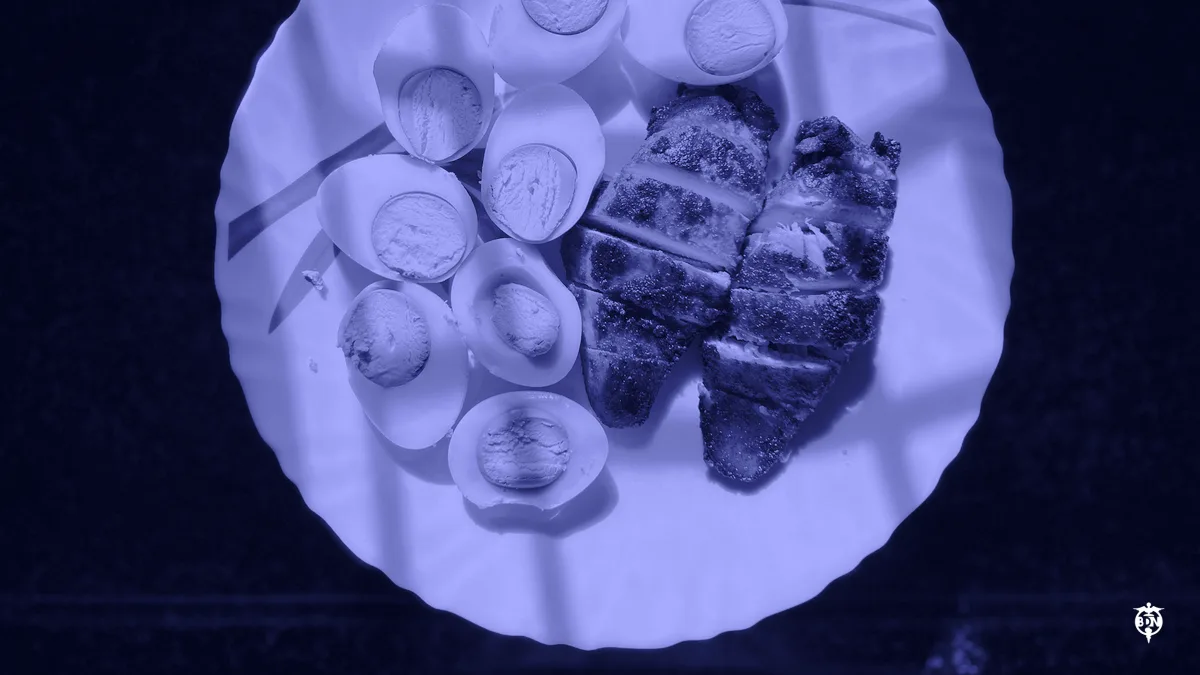
Cleveland Clinic and Dr. Bagshahi’s guide recommend lean protein sources that are low in saturated fat and calories, such as:
- Chicken and turkey without the skin
- Fish and shellfish
- Lean cuts of beef or pork, and 90% lean ground meat
- Eggs and egg whites
- Greek yogurt and low-fat cottage cheese
- Low-fat cheese
- Tofu, beans and lentils
Dr. Bagshahi’s guide suggests baking, broiling, grilling or slow-cooking meat instead of frying it, and choosing cuts labeled “lean,” “extra lean,” “loin” or “round.” It advises skipping sausage and bacon.
Early on, moist, tender protein goes down most easily. Dry or tough meat, especially steak, is often hard to tolerate in the first weeks. See Diet Stages After Bariatric Surgery for when each food comes back.
Protein shakes
For many patients, shakes are the only way to reach the goal early on. Dr. Bagshahi’s guide notes that most patients need one or two protein shakes a day, especially in the first 6 to 12 months.
What to look for:
- Protein: Cleveland Clinic suggests 15 to 30 grams per serving. Dr. Bagshahi’s guide and UCSF Health look for more than 20 grams.
- Calories: fewer than 200 per serving (Cleveland Clinic and UCSF Health)
- Sugar: less than 5 grams per serving (Cleveland Clinic and Dr. Bagshahi’s guide)
- Type of protein: whey, egg white or soy, according to Dr. Bagshahi’s guide. Cleveland Clinic warns not to use collagen as your only protein source.
Shakes with 30 grams of protein or more can be hard to tolerate soon after surgery, Cleveland Clinic notes. Dr. Bagshahi’s guide suggests sipping 2 to 4 ounces at a time and drinking shakes between meals instead of snacks.
Unflavored protein powder is another option. His guide suggests stirring a little into broth, soups, yogurt and other soft foods throughout the day. Small amounts won’t change their taste or texture.
If milk doesn’t agree with you
Surgery can bring out lactose intolerance you didn’t have before. ASMBS notes this happens with gastric bypass and duodenal switch, and Cleveland Clinic calls it common after surgery. Symptoms include cramps, gas and diarrhea after dairy. Lactose-free milk, lactose-free protein shakes or a lactase enzyme product can help. UCSF Health says yogurt is usually still fine.
Keeping track
It’s hard to guess how much protein you’ve had. Dr. Bagshahi’s guide recommends logging what you eat in a food-tracking app, or on paper using a “rule of 7”: one ounce of lean meat, poultry, fish or low-fat cheese has about 7 grams of protein.
His guide suggests checking your total around 2 or 3 in the afternoon. If you’re far behind, plan a high-protein meal, snack or shake. Before bed, ask yourself whether you’ve reached your goal.
Questions to ask your bariatric team
- What is my daily protein goal in each stage, and long term?
- Which protein shakes or powders do you recommend?
- Should I get my protein levels checked in my blood tests?
- I have kidney disease. Is a high-protein plan safe for me?
More on eating after surgery
- Diet Stages After Bariatric Surgery: What to Eat, Week by Week
- Vitamins and Minerals After Bariatric Surgery
- Staying Hydrated After Bariatric Surgery
- Bariatric Surgery Diet: What to Eat Before and After
Dr. Bagshahi is a bariatric surgeon in Fort Worth, Texas. See Dr. Bagshahi’s Best Docs Network profile for more about his practice.
Sources
- Dr. Hossein Bagshahi, Bagshahi Bariatric and General Surgery: Bariatric Surgery Nutrition Guide (patient handbook, 2025)
- American Society for Metabolic and Bariatric Surgery: Life After Bariatric Surgery
- American Society for Metabolic and Bariatric Surgery: Symptoms and Concerns
- Cleveland Clinic: Stronger Every Step: Your Metabolic and Bariatric Surgery Guide
- Cleveland Clinic: Bariatric and Metabolic Institute Guide to Surgery
- MedlinePlus (U.S. National Library of Medicine): Your diet after gastric bypass surgery
- UCSF Health: Recovering From Bariatric Surgery
- UCSF Health: Dietary Guidelines After Bariatric Surgery
- National Institute of Diabetes and Digestive and Kidney Diseases: Eating Right for Chronic Kidney Disease
- Mechanick JI, et al. Clinical practice guidelines for the perioperative nutrition, metabolic, and nonsurgical support of patients undergoing bariatric procedures, 2019 update. Endocrine Practice, 2019.
- Ben-Porat T, et al. Is There a Need to Reassess Protein Intake Recommendations Following Metabolic Bariatric Surgery? Current Obesity Reports, 2025.
- Moizé V, et al. Nutritional Challenges and Treatment After Bariatric Surgery. Annual Review of Nutrition, 2024.
- Romeijn MM, et al. The effect of additional protein on lean body mass preservation in post-bariatric surgery patients: a systematic review. Nutrition Journal, 2021.
This article is for general information only and is not medical advice. Talk with a qualified health professional about your own situation. If you think you may have a medical emergency, call 911.